Garage Door Repair for Council Bluffs' Older Housing Stock
Council Bluffs homes built 1938-1980 carry original hardware into a severe cold climate.
Read moreBlogCouncil Bluffs, IA · 4 min read
Council Bluffs homes mostly date 1938-1980, so service calls here deal with original hardware and cold-climate wear. Here's what a visit actually involves.
Local detail
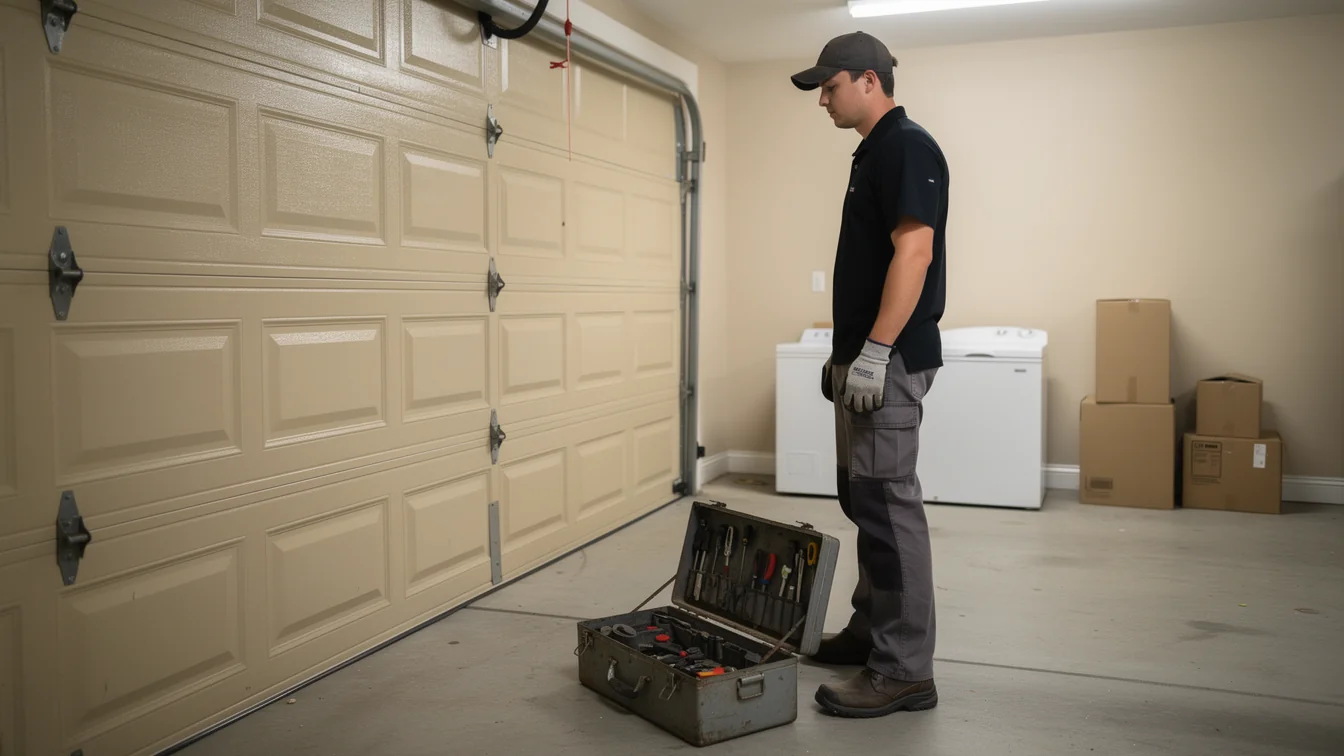
Call before the door stops working entirely, not after. A door that slams the last six inches, a spring that's visibly stretched or gapped, an opener that grinds before it lifts - these are warning signs, not quirks to live with. In a service area where most houses went up between 1938 and 1980, with the bulk of that stock from the 1960s and 70s across the seven areas we cover, a lot of doors are running on hardware that's older than the homeowner. Torsion springs rated for 10,000 cycles don't care what decade it is; they fail on schedule. If your door is original to a house built in that window, get it looked at now rather than when a cable snaps and the door comes down crooked on one side. We'd rather spend twenty minutes on a courtesy check than get the after-hours call when the spring lets go in January.
The area
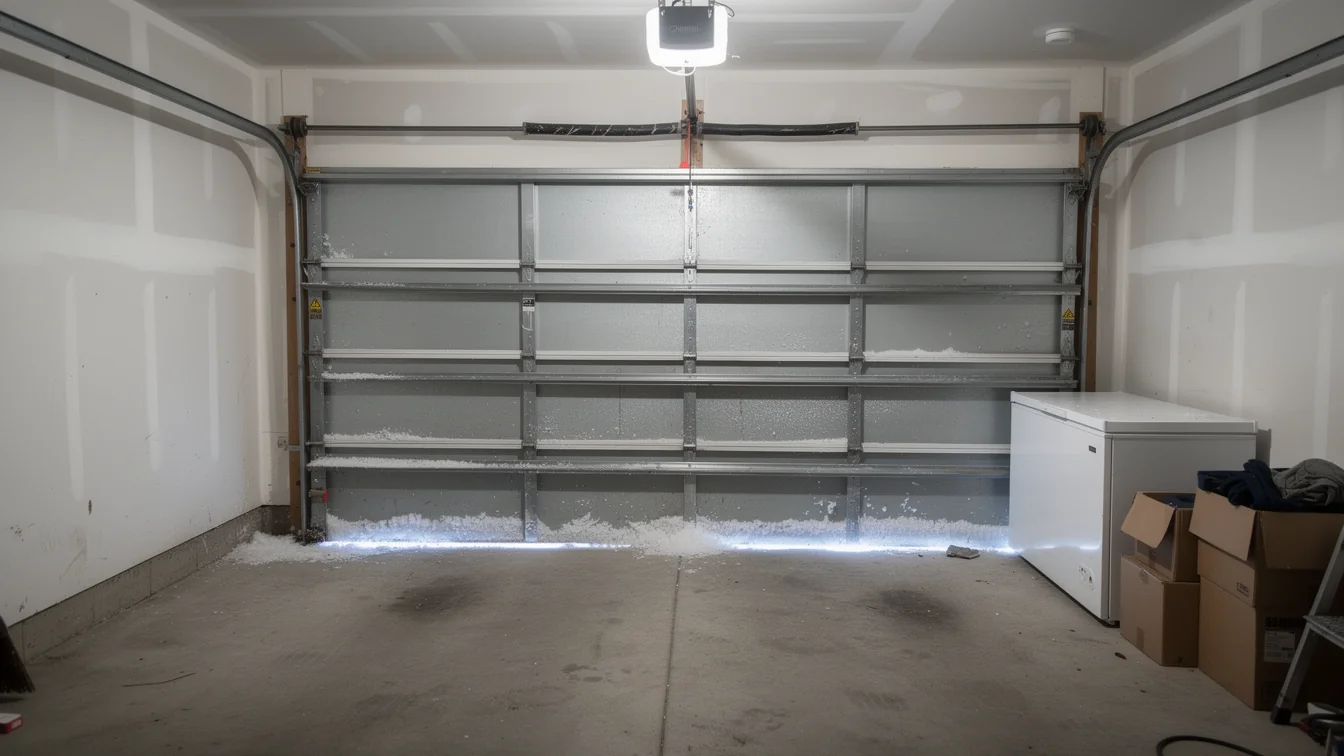
The doors we see most often in Council Bluffs are tied directly to when the neighborhood was built. Pre-1980 houses typically got single torsion or extension spring setups sized for lighter, often single-layer steel or wood doors - not the heavier insulated panels people retrofit in later. When an owner swaps in a modern insulated door but keeps the old spring and track hardware, the balance is wrong from day one, and the opener works harder than it should, which burns out the motor early. Add a severe cold climate band and you get a second layer of trouble: metal contracts, lubricant stiffens, and rollers that were marginal in July start binding in January. We see broken torsion springs, seized rollers, and pulled-loose track brackets most in the months when overnight temperatures swing hard. A call that sounds like 'the door just stopped' is usually one of these two problems compounding each other - old hardware meeting cold-weather stress.
What we find
We're not going to quote a number here that doesn't hold up once we're actually looking at your door - pricing depends on spring size, door weight, and what's already failed, and giving you a flat figure before a technician sees the setup would be a guess dressed up as a fact. What we can tell you is what drives the cost: whether it's a spring-only fix or the whole torsion assembly, whether the opener needs replacing alongside it, and whether your track hardware is original equipment that needs sourcing versus a standard modern part we carry on the truck. Older homes in this area sometimes need a part that isn't a stock size anymore, which can add a day to the job while we source it. That's the one honest limitation worth saying plainly: if your door is original to a house built well before 1980, don't expect same-day parts on every repair. We'll tell you on the spot if that's the case before we start.
How we work
Cold-climate swings do real, measurable damage to garage door hardware over a winter, and that's the main reason service calls cluster the way they do here. Steel contracts in deep cold, which tightens tolerances on tracks and rollers that were already worn from decades of use in housing built mostly in the 1960s and 70s. Grease that was fine in August turns to paste in January, so openers strain and belts or chains stretch faster than they would in a milder climate. None of this is unique to one street - it's the pattern across the service area, from Carter Lake five miles out to Glenwood fourteen miles the other direction. What changes call to call is the age of the door and whether it's had any maintenance at all since it went in. A ten-minute lube and balance check before the hard freeze hits saves most of the emergency calls we get in the dead of winter.
Questions
If your house was built in the window most common here - 1938 to 1980, with a concentration in the 1960s and 70s - there's a real chance the door and spring assembly are original or close to it. That's worth mentioning when you call, since older hardware sometimes needs a part we have to source rather than carry standard.
This area sits in a severe cold climate band, and steel hardware contracts and stiffens in deep cold. Grease thickens, rollers bind, and springs under tension are more likely to snap when metal is already contracted. Most of our emergency calls cluster in the coldest stretches of the year for exactly this reason.
Not an honest one. Cost depends on spring size, door weight, and what's actually failed, and we won't quote a flat number before a technician sees the setup. We will tell you upfront what's driving the cost and flag it immediately if your door needs a part that isn't a standard stock size.
Yes - our service area includes Carter Lake, Crescent, McClelland, Treynor, Underwood, Glenwood, and Neola, ranging from about 5 to 19 miles out. Call and let us know where you are; we'll tell you straight if it's outside what we cover.
Recommendation
More garage door guides for Council Bluffs homeowners.
Council Bluffs homes built 1938-1980 carry original hardware into a severe cold climate.
Read more
Council Bluffs homes mostly date 1938-1980.
Read more
Council Bluffs homes built 1938-1980 run original torsion hardware that fails hard in severe cold.
Read moreReady when you are
Council Bluffs Garage Door Pros repairs and installs garage doors, springs and openers in Council Bluffs, IA and the surrounding area.