Garage Door Repair for Council Bluffs' Older Housing Stock
Council Bluffs homes built 1938-1980 carry original hardware into a severe cold climate.
Read moreBlogCouncil Bluffs, IA · 4 min read
Council Bluffs homes mostly date 1938-1980. Here's how that housing stock and the cold winters here decide when a garage door repair is worth it.
Local detail
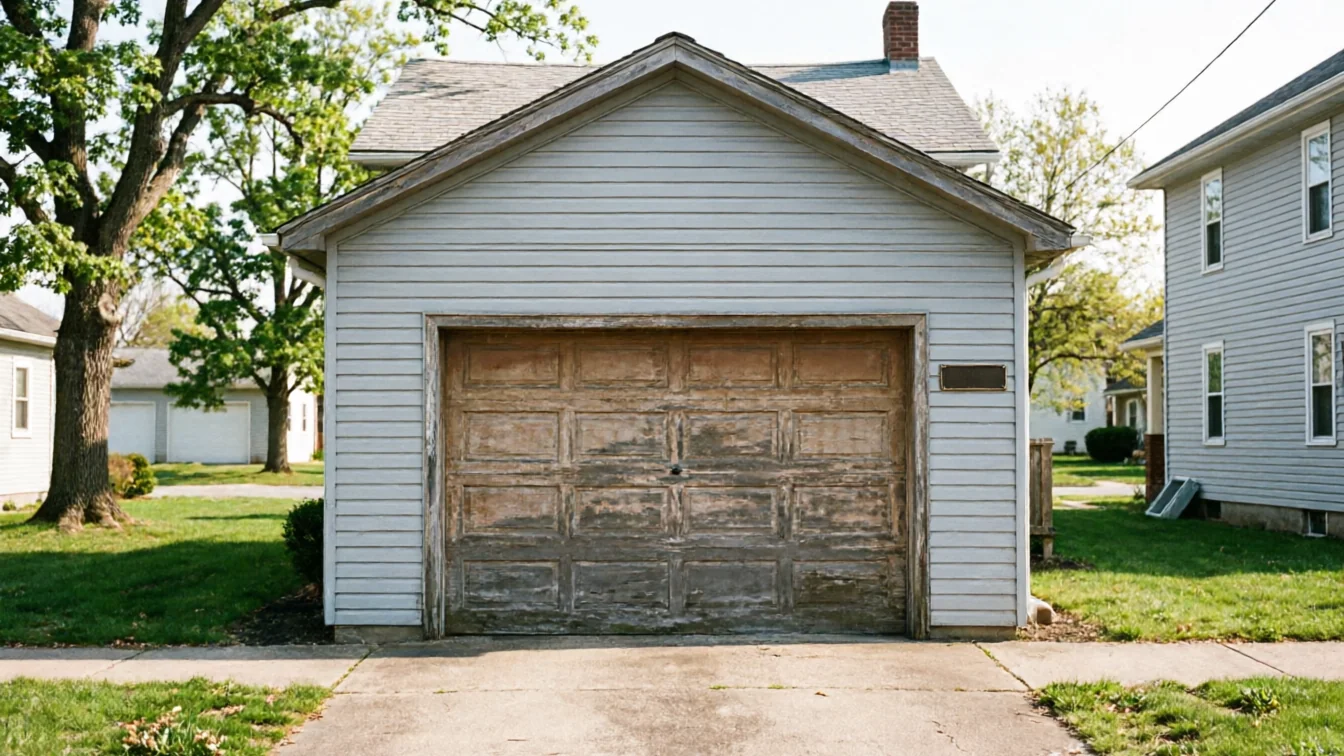
Call before a small problem turns into a stuck car and a missed morning. A door that slams the last foot instead of settling, a spring that looks stretched or has a visible gap in the coil, or an opener that grinds and reverses on its own are all signs the hardware is past adjusting and into failing. With housing across this area built mostly between 1938 and 1980 (median year 1972), a lot of doors still running are original or close to it, and original hardware doesn't fail gently - it fails on the coldest morning of the year, because cold steel is brittle steel. If your door is from that era and you haven't had the springs or cables looked at, don't wait for the day it won't open at all.
We won't tell you every noise means a new door. Plenty of doors from the 1960s and 70s just need the track realigned or the rollers replaced. But if the panel itself is warped, rusted through at the bottom, or the torsion tube is pitted, that's a structural issue no amount of lubrication fixes.
The area
Seven named areas around here - Carter Lake, Crescent, McClelland, Treynor, Underwood, Glenwood, and Neola - mostly carry the same housing stock: homes built in the 1960s and 70s, with a meaningful share going back to the late 1930s. That means a lot of garage doors on hardware that predates modern wind-load and insulation standards, running on torsion springs rated for a lighter door than what's sometimes been hung on them since.
The practical problem is parts. A door from 1965 doesn't take the same track brackets or spring winding cones as something installed last year. Finding an exact match sometimes means retrofitting newer hardware onto an old frame rather than ordering a replacement part off a shelf, which changes both the cost and the time a repair takes.
What we find
We don't have a flat number to quote here, because what you pay depends on whether we're replacing a spring, fixing a track, or reworking hardware that doesn't match anything made today. A straightforward spring swap on a standard double door costs less than a job where we have to adapt old brackets or source a non-standard torsion tube size, which comes up more often on the pre-1980 doors common in this area. Ask for a number before the job starts, not after - any shop that won't give you one before touching your door isn't one to trust with it.
How we work
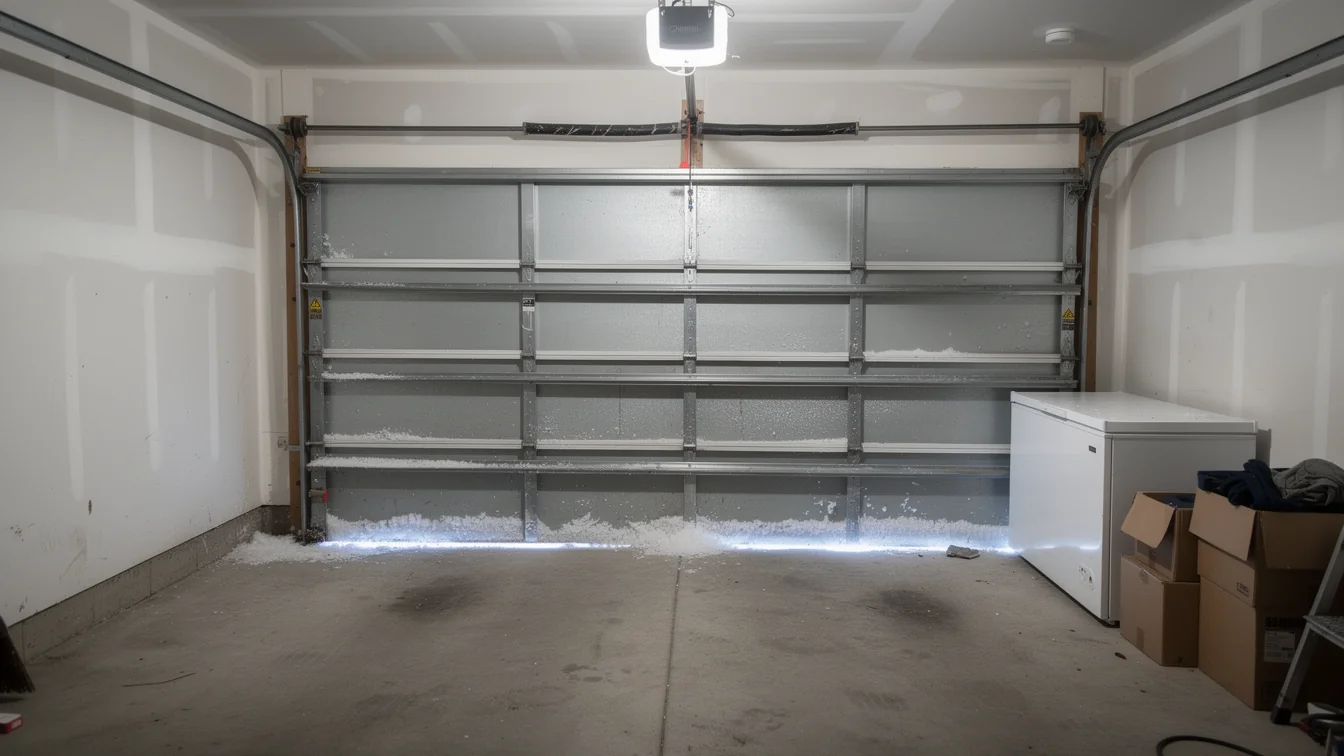
This area sits in a severe cold climate band, and that matters more to a garage door than most homeowners expect. Steel springs lose tension and become more likely to snap as the temperature drops, and that effect is worse on springs that are already decades old and have taken thousands of cycles. Nylon rollers crack in the cold. Lubricant that was fine in August gums up in January and makes the opener work harder than it should, which shortens the life of the drive gear.
On a door built to the standards common in houses from 1938 to 1980, none of this is designed in - it's just what happens to old steel in a place that gets genuinely cold winters. A door that's marginal in October usually fails in a cold snap, not gradually. That's the pattern we see most, and it's why fall is a better time to deal with a spring that's showing its age than February.
Questions
Often yes, if the frame and track are sound - a lot of this area's housing stock is from exactly that era and the hardware can usually be repaired or retrofitted. It's not worth it once the panel is rusted through or warped, or when the torsion tube itself is pitted enough that new springs won't seat properly.
Cold steel is more brittle, and a spring that's already worn from years of cycling is more likely to fail when the temperature drops hard. This area sits in a severe cold climate band, which is part of why we see more spring failures in the coldest stretches of winter than any other time of year.
Yes, those are both within our service area, along with McClelland, Treynor, Underwood, Glenwood, and Neola.
Recommendation
More garage door guides for Council Bluffs homeowners.
Council Bluffs homes built 1938-1980 carry original hardware into a severe cold climate.
Read more
Council Bluffs homes mostly date 1938-1980, so service calls here deal with original hardware and cold-climate wear.
Read more
How opener age and cold-severe winters interact with power outages in Council Bluffs homes built 1938-1980, and what that means for your door.
Read moreReady when you are
Council Bluffs Garage Door Pros repairs and installs garage doors, springs and openers in Council Bluffs, IA and the surrounding area.